
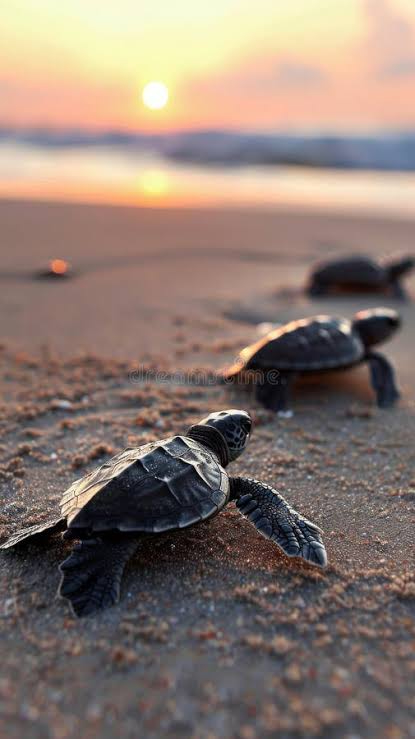
THEY’RE GOING TO MAKE IT
…..lost and found in Mexico.
Vanessa suggested. I accepted. Even though I knew better. Or should have.
A Resort & Spa in Cabo San Lucas where lightly larded men pace azure pools waving cocktails, whooping S-class Maybach! Royal Troon! Sanctuary Machu Picchu!
where gleaming unguinous women pace parallel paths waving cocktails,
crying Blue Jean Birkin! Jimmy Choo! Spa at Aja Malibu!
Getting redder, getting louder, getting drunk.
Not me. Them.
I watch polite, opaque workers. I want to apologize.
I hide in my room. I walk the beach. Swimming is not permitted.
The one thing I wanted.
This change of scene is not going to work. This place makes it worse.
I might never be happy again.
Last day, we leave the wretched compound for Todos Santos. Our earnest young driver gestures: water, a-c, whatever we need.
I want to apologize.
As we drive through the pretty town, Sophia, my granddaughter, says Why didn’t we stay here?
Vanessa, her mother, does not demur.
I’m keeping my mouth shut. I only came along because Wayne’s gone, and because of some grassy idea that I’m needed.
~ ~ ~
Dinosaurs died 66 million years ago. More or less.
Venus is 66 million miles from earth. More or less.
Sea turtles evolved 110 million years ago, maybe in this very sea.
They’re still here. More or less.
The rescue-and-release operation we’re trying to find is trying to keep it that way.
~ ~ ~
After two hours of highways and backroads, we head down a dirt track to a dead end.
Our driver studies his phone. He looks around.
To our left, chaparral. To our right, sand dunes. Ahead, scattered families and rusty metal barbecues.
Our driver looks puzzled. He looks at his phone again. He looks up and points to a sand dune.
It’s there, he says.
Where? we say.
~ ~ ~
Venus, the only female planet, is described as hot and hellish, a volcanic place.
Loving Wayne was rarely hellish, but it could be hot. Even volcanic.
Why does becoming a sudden widow make you suddenly old?
Must you consider your own demise?
Is it too late?
~ ~ ~
The asteroid hit our Earth at 45 thousand miles per hour.
Voyager1 goes about 38 thousand miles per hour. Close enough for comparison.
Or if you prefer a natural object, the peregrine falcon, fastest animal on Earth,
can reach 389 miles per hour.
My point: that thing was hurtling.
~ ~ ~
Our driver looks at his phone a third time. He looks at the dunes a third time. His head twitches.
A minute, he says, and he jumps out of the immaculate black Escalade and takes off,
up and over the dunes.
We are lost.
~ ~ ~
The asteroid’s impact released more energy than that of one billion Hiroshima bombs.
It gouged a crater 18 miles deep and lofted a rooster tail of molten material into the stratosphere, some of it several times hotter than the sun.
Was it ever not too late?
~ ~ ~
The driver returns to us, flushed, triumphant, his starched white shirt streaked with sweat.
It’s there, he says again, and once again he points to the sand dune.
So we follow him up and over.
I want to pick a hunk of ice plant, I want to break it, sniff it, rub it on my arm, but I keep up.
Without Wayne, I am without will.
We reach the beach.
Nothing. No rescue-and-release operation.
Parents, kids, couples holding hands; a sky beginning to pink, dark heads in the surf.
Then, down the beach, I spot the nonchalant slats and beat-up sheet-plastic of a hangar.
Tortugueros las Playitas.
And a knot of gringos, and a gaggle of locals, and darting dark-haired kids, and some kids
are working and their earnest passion turns the air gold, I can see it from here.
~ ~ ~
Have you thought about the color of the ocean? Because I was always in it, the ocean was diluted tea water suffused with sand and seaweed, a churning liquid cradle that never failed.
When they sang about the deep blue sea, I could never see it.
The eyes are funny that way.
~ ~ ~
What would you have seen as a six-mile-wide hunk of black rock hurtled toward you
at 45 thousand miles per hour?
What did it sound like?
Nothing.
The rock pushed before it a superheated, supersonic shock wave.
You’d have incinerated in an instant.
Then dust and soot blocked the sun, then photosynthesis stopped, then seventy-five per cent of Earth’s organisms died. But I’m interested in the instant.
~ ~ ~
What, exactly, is an instant?
An infinitesimal space of time.
A point in time separating two states.
Infinitesimal, a variable that has zero as its limit.
Does anything actually happen in an instant?
I always say that Wayne died in three days. That’s my story:
My darling, strapping, 68-year-old rower died in three days from seasonal flu.
Not true.
He was feverish, coughing up his lungs, but he was alive.
He died when his heart stopped.
In an instant.
I wasn’t there.
~ ~ ~
Every day at daybreak, volunteers follow turtle tracks to nests to dig up eggs
and plant them in the hangar for safe keeping. Deep, to stay cool.
It’s a prayer.
Safe keeping.
When babies emerge, they dig again, taking care around still-sleeping eggs to extract hatchlings and lay them in tubs of wet sand.
Day after day, December through March, Tortugueros las Playitas is saving sea turtles,
black, olive ridley, and the critically endangered Pacific leatherback sea turtle,
species that survived the 6-mile-wide rock that slammed into the earth 66 million years ago
at 45 thousand miles per hour.
I forgot to mention that the gigantic rooster tail contained 25 trillion metric tons of debris.
I should also mention that it’s thought the earth’s capacity for CO2 sequestration could be as large as 25 trillion metric tons. A very large number that could save us.
~ ~ ~
It haunts me: did Wayne know?
I think you must know, if only in the instant.
But how far from zero must it be to allow time to know?
Maybe long enough for an oh.
~ ~ ~
Brianna, the charming girl-chief, is reciting rules while wrangling kids.
They help me with my Spanish, she apologizes.
The kid-biologists, dashing here and there, are trying to protect newly-hatched turtles from other little kids, who won’t stop touching.
No tocar! No tocar!
Brianna will allow a few visitors into the hangar. You have to push, and look,
I pushed, I found my will, I wanted to get into that hangar.
Inside, dim light, church quiet. Rows and rows of smooth, platter-sized rounds marked by
stir-sticks, and where turtles have begun to hatch, the smooth round is surrounded by
a little wire fence so babies can’t crawl off and die.
I love this airless place. But it’s a strange love, because it’s as if I’m not really here, or not really myself. So who is loving this?
The Biologist arrives, a California surfer with blue-sky eyes and a crinkly blonde bob who smiles at me, gringa, thinking I am the “other biologist.” This pleases me. Brianna shoos us all out.
I put two twenties in a coffee can to adopt Number 99.
Once again, I am without desire, I am just-here. We squat around tubs, we sift through sand,
we wander, we chat. Here, at this beach, with these people, I am finally—here. My arms hang slack, so relaxed, waiting for sunset as more new turtles are ferried out by kid-biologists.
Gray babies; they’ve just woken up.
Some children keep trying to touch; some parents manage better than others. It’s gotten noisy, occasionally screechy, and I can tell this is driving Sophia crazy.
Planted beside her rubber tub, she fends off.
As Brianna explains the mission—habitat protection, environmental education, community outreach—
the sun disappears into the Pacific, and the sky, the clouds, go salmon orange vermillion with lemon yellow edges. The ocean is a restless no-color blanket, the breaking waves iridescent.
Finally, they redistribute babies across the eight rubber tubs and direct us to divide up.
Sophia clutches her tub.
The Biologist proposes that she give it to the local family with the little kid.
Sophia produces pleading eyes and promises to share. She does not let go.
So the tall leggy girl with long honey hair and the tiny brown girl with fine black curls
carry a green rubber tub full of newly-hatched turtles down to the waterline together.
Side-stepping, hanging on, together they go. I follow, my slack-happy self.
At waterline. the Biologist, full of grace, hops backward drawing two long lines in the sand with his toe.
We spread out—thirty? fifty? I can never tell the size of crowds—behind the first line.
Now full-of-grace jogging the line, the biologist instructs:
Once you release the hatchlings, stand behind the second line.
DO NOT MOVE if caught by a wave, because hatchlings could be washed behind you.
Once they reach the ocean, the hatchlings will attach themselves to—garbage, a piece of wood—to make themselves look larger, less like food. They eat the algae on it.
Well, I guess garbage is good for something, we all say.
We’re told that many—most!—survive. We are glad.
The sun has gone, the air’s deep gold; we are glad.
The Biologist gives the signal.
Sophia and the little girl, as one, gently tip the tub, and little turtles
tumble out.
One promptly flippers toward the surf.
I glance at Wayne, who isn’t here.
Then another, and another: a diffuse, slow-motion swarm of tiny turtles, tiny rocking tanks,
flippering toward the sea. The group next to us is cheering Go, Fred! Go, Taco!
Four of our turtles, the newest, grayest ones, lie unmoving in a footprint. We aren’t allowed to touch.
My arms tremble. Wayne!
Finally, a kid-biologist swoops in and plucks them out.
Still they don’t move. Still we can’t touch. Wayne!
Please don’t die.
After thirty minutes most have made it to water, which rolls them, which buries them—
And the Biologist assures us they’re going to make it.
One of our lethargic four has gotten halfway, and another has taken two steps, but the other two—and it’s time, we have to leave, and still they are stranded.
The Biologist assures us they’re going to make it.
But what about the pelican over there?
They’re going to make it.
Our diligent driver finds us. His lips are parted, his face alight.
He’s never been here, he says, never seen this.
He admits he’d been worried. He thought we were lost.
But you drove right to it! You were perfect! Perfect!
We laugh together. The dusk has gone full dark gold, and we are, all of us
—I am—glad.