
EXTINCT
Kettle of One
Igor was a smart bastard. That’s what Pete the trapper said. But Igor was also an only bastard, the last free-flying California condor on earth. Condors are sociable birds; they roost and preen and feed in groups called kettles, and by the spring of 1987, Igor was a kettle of one. No doubt he was lonely. That was about to change.
. . .
Rory was a smart little budgie. That’s what her Aunt Patsy, the Budgie Artist, said. Nine-year-old Rory had landed in twenty-two-year-old Patsy’s care after a car crash took Rory’s parents. After a long stretch of silent devastation, during which each grieved alone, though Rory might creep into Patsy’s bed at night, Patsy and Rory bonded. Both were smart, curious, and cautious. Neither was loquacious. Both loved birds, though Rory preferred the ones not in cages. In the spring of 1987, Rory was Patsy’s only kid. There were 1500 classmates at her new high school, and Washington, D.C., where they’d moved for Patsy’s career, and held 639,000 fellow citizens (the census of humans and condors had gone precipitously in opposite directions). Still, Rory was lonely. That was about to change.
Nets
In the dark before dawn on Easter Sunday, at the Bitter Creek National Wildlife Refuge southwest of Bakersfield, Pete began to dig. He had to work quickly. Research shows that crows recognize individual humans for good and ill, and Pete knew this was true of condors as well. For five years Igor had watched the Condor Recovery Project, the bait-and-shoot, the chases into caves. When Pete wrestled the second-to-last wild condor, American Condor 5 (AC5), into a Sky Kennel six months earlier, Igor was watching from the crown of a nearby oak.
But they couldn’t get Igor. He disdained the tasty bait. He was only spotted in the air, on distant ledges, or high in trees, and cannon nets tangle when shot into trees. So Pete resorted to the old Indian trick.
When the hole was big enough, Pete dragged a calf carcass within reach, laid his shovel in, and then himself. He piled dirt and straw over his body and settled a debris-covered basket over his face. Through the slits, he watched the sun cross the sky as ravens went to work on the carcass.
Condors’ sight is average, their sense of smell poor; they often find fodder following the shrieks of other scavengers. After half a day of watching the ravens have at it, Igor lit. Head tilted, he sidled toward the carcass in fits and starts. Finally, after one last suspicious survey, Igor buried his head and began to tear at calf flesh.
Suddenly, with an explosion of soil and straw, Pete leapt up, launched himself onto the six-foot bird and wrapped his arms around the mammoth wings. Igor’s fleshy head flushed deep red; he thrashed with his talons; he struck with his beak. Pete hung on, his face also flushed. It was desperate. Finally, taking some last painful bites for the preservation of a species, Pete managed to cram Igor, American Condor 9, into the kennel.
. . .
Rory, the new Junior at Woodrow Wilson High School, was tall, with pale features, a startled expression, and long, silver-blonde hair. She ate lunch, eyes down, at the loner table. She did not play field hockey or volleyball, she didn’t try out for cheerleader, and she dodged the basketball coach. An ardent, though shy, bedroom singer, she did inquire about the chorus, but then she never showed up for her audition.
One November Friday, Cherie, the girl who had been kicked out of Catholic school, who sat next to Rory in Latin II, invited her to go see Fatal Attraction. Cherie seemed nice, and Rory wasn’t good at saying no, so that evening she climbed into Cherie’s baby blue Cabriolet to be carried off not to the Admiral Theater, as it turned out, but to a bash down in Georgetown. Cherie hadn’t wanted to walk in alone.
The living room of the brick row-house throbbed with the Sex Pistols and screaming teens in slam-dance abandon. Cherie drifted into a back bedroom with some football player called Tank. Rory drifted into a corner.
In the kitchen, a towering, brown-eyed, second-generation Italian boy called Buddy (Salvatore Junior) was pulling himself a brew while carrying on a conversation over his shoulder with four guys peeing off the back porch.
“C’mon, cock-hound,” they bellowed.
“Put YOU all to shame,” Buddy bellowed back.
“Bullshit!” Wild cackles. “Everyone knows it’s the big bastards have tiny dicks!”
Buddy guffawed, and beer streamed onto the linoleum floor. When he turned to right his cup, he spotted the gleam of Rory’s hair. He flipped the spigot and went to investigate, leaving the dicks on the back porch and his date in the den.
Rory was reading album covers. She never saw him coming. Rory was not exactly captured, she told Cherie, who became her best friend, but the moment Buddy took hold of her arm it was as if he had cast a net.
Igor was the last one. A species faced extinction. There were a million girls like Rory. Does “extinction” apply to an individual soul?
Species
Since the Pleistocene Era, roughly 1.8 million years ago, California condors (Gymnogyps californianus), the largest birds in the New World, have soared over the parched steppe, gorge-and-cliff, and oak savannah of western North America from British Columbia to Baja California, as well as parts of the American southwest and Florida. In the early days they fed on decomposing mastodons.
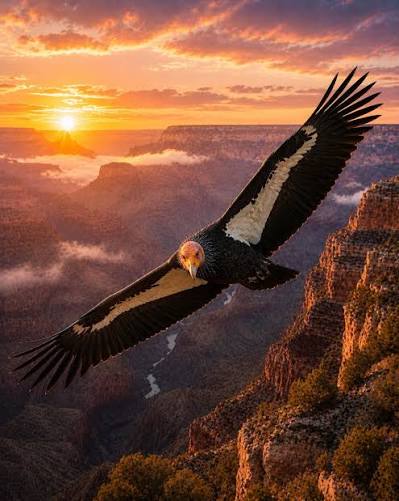
Genetically the condor is related to the stork, another hulking, ungainly bird, but unlike storks, condors are perfect air machines. They rise, circle and float for hours without a flap. In a dive, they roar like biplanes. A condor can travel 140 miles in a day, and because they cannot carry a carcass, either in their snub beaks or with feet adapted for walking on land, when they find food, they gorge. The overstuffed crop, like an enormous Adams apple (laryngeal prominence), can be seen from far below.
Condors stay clean by dipping in streams and flinging water everywhere, including on themselves. For mating displays or dominance squabbles, they use their bodies—flailing, prancing, bobbing, dancing—sometimes to comic effect. (Igor turned out to be a clumsy, but irresistible, dancer.) When excited, their skinheads change color and they make un-birdlike hisses, growls, and grunts. But condors do not sing. They have no voice box.
Like all New World vultures, condors form pair-bonds for life. They soar, roost, preen, sunbathe, play, and wash up with friends. They pick each other’s nits. You would think people would find condors charming. Even admirable.
But no. They are vultures.
. . .
Humans, (Homo sapiens), among the most abundant mammals on the planet, were in Africa evolving into their present form during the Pleistocene era. It was not until the Holocene, roughly ten thousand years ago, that humans appeared in the New World.
Like condors, like primates—humans and chimpanzees share about 98.6 percent of their DNA—humans are social animals. But humans are aggressive. To manage things, Homo sapiens developed courts of law, religious doctrine, and gossip.
Like all primates, newborn humans are helpless and require an extended childhood, so Homo sapiens also evolved a capacity for attachment. This capacity may facilitate pair-bonds and family groups—promoted through courts of law, religious doctrine and gossip—as well as gangs, book groups and rabid Cubs fans.
As humankind developed, they concocted not only spoken language but abstract reasoning and introspection. They developed an appreciation for beauty and a desire for self-expression, inventing music (Monster Mash to Beethoven’s Ninth), art (Velvet Elvis to Mona Lisa) and literature (Passion’s Promise to War and Peace.)
With such terrific brains, you would think humans would be able to anticipate the unintended consequences of their actions.
Not really. They are human.
Names
People call condors buzzards, flying rats, no-good harpies, garbage-mouths, pigs with wings. Muddled up with their fodder—a strict scavenger, the condor’s only food is dead and rotting—condors are seen as filthy, smelly, repulsive. The smelly part is true.
Condor has never entered the popular lexicon, but the condor is a vulture, and when vulture comes into slang, we get culture vulture (an arts consumer), vulture capitalist (an opportunistic moneylender), money vulture (a greedy person), and vulture pie (a pizza so poorly constructed it is unfit for human consumption). And should a substandard baseball pitcher somehow prevail: Yoervis Medina vultured a win!
Since this strict scavenger destroys exactly nothing in the course of doing business, maybe we should call it Gandhi.
. . .
Rory’s mother had called her Panda—the baby halo of bone-white hair—Ro-Ro, and Cutie-Patootie. Her father had called her Sister. Schoolmates had dubbed her the Friendly Ghost when they were being nice and Golem when they weren’t, but usually they just called her Rory. And to Patsy she was Budge. Since Patsy bred rare crested parakeets and made her living from filming their antics–that was her art–Budge was endearment. It also said something about Rory’s basic reluctance.
Buddy, one of those guys who bestows nicknames on everyone, bestowed upon Rory M.J. and Mary Jane because of the time she smoked marijuana with Cherie, which he did not approve of and did not forgive her for, more for going behind his back than for using an illegal substance. More often, it was Rosie, Rosalinda, Rigatoni, and, in an intentional twist of Patsy’s endearment, Pudge. Rory came to understand that his “endearments,” like his “teasing,” were tiny time-release darts. Objecting would activate the poison.
Her name is Aurora Rose. Her romantic mother had named her after the dawn and her favorite flower. No one called her Aurora Rose. In Rory’s mind, this was because this beautiful name, like the name of Yahweh, must not be spoken. But she called herself Aurora Rose, in her mind.
Maybe we should, too.
Decline
In 1890, the first official count estimated the condors’ numbers at six hundred, but over the next ninety years this number declined until, in 1982, the population had dwindled to twenty-two. Twenty-two California condors in the world.
Why? Because condors produce roughly one egg every other year, and this only after they reach six years of age. This stately rate of reproduction could not keep pace with the loss of habitat, let alone the new sources of lethality brought by the settlers of European descent.
Poison in the dead coyotes and wolves baited by farmers was ingested by condors.
Lead bullets in dead bear, deer, squirrel, armadillo–shot for sport and left to rot–were ingested by condors.
Power lines, tricky for a ten-foot wingspan, electrocuted condors, or broke their wings so that they died on the ground of starvation or predation.
And there was rampant pilfering of condor eggs. (A condor’s nest is often the stone floor of a cave.) Perhaps people ate the large, greenish orbs, but more likely it was just another pinecone for the mantlepiece.
And the shotgun. Hunched, black vultures with unkempt ruffs, beady eyes, rubbery pink heads, and thick black beaks—like snub-nosed revolvers—do not excite appreciation in some people. Of course, people shoot eagles, too.
Because he was smart, curious, and cautious, Igor had managed to avoid the net. It was just dumb luck that he also avoided the poison, lead bullets, power lines, collectors, and the shotgun to become the last, proud symbol of his clan.
. . .
Aurora Rose had started out as the easiest baby anyone ever saw, a perfect little doll, but it seemed that people—strangers—felt compelled to touch that silky white baby hair, and she grew shy. Rory’s father, the son of a judge and a devout Baptist, had married the beautiful oldest daughter of another state judge, Patsy’s debutante older sister and complete opposite. After a heroic career at ‘Bama, Rory’s father had flamed out of Major League baseball, so he took up the thing he was best at, serving his country. Until that icy country road got them.
Patsy, who was not good at social stuff, wasn’t much help to Rory once adolescence hit. With her height and silver hair, Rory drew attention. Then she developed breasts. She began to slouch. She stayed in her room. She carried the excruciating sense that someone was staring at her and, eyes downcast, she tried to avoid walking across open spaces. By the time she moved to D.C., she was the opposite of proud.
Buddy’s love would change that.
Brink
Extreme efforts ensued from the panic of only twenty-two condors. Through 1983 and 1984, eggs and chicks were spirited into captivity at the San Diego Wild Animal Park. Biologists kept tabs on the five breeding pairs still in the wild, but in 1985, disaster struck. Six birds went missing, leaving only nine free-flying condors, and worse, only one breeding pair. Still, biologists, ornithologists, conservationists, wildlife managers, and bird lovers could not thrash out a plan. Some insisted the condor must make it on its own to truly be a wild species. Others advocated taking all necessary steps to preserve the diversity of the dwindling gene pool. As debate raged, three more adult condors were captured. One more wild bird died. By 1986 there were only five condors left in the wild. In captivity, twenty-five.
If a wild animal lives and breeds only in captivity, is it extinct?
. . .
Patsy moved them again, this time from Washington D.C. to Oakland, California, where she’d gotten a teaching job at Brainard College of the Arts. Rory was bereft. Buddy had been like the plug for some perpetually empty socket. She wrote him every day on pink scented paper.
But when she began her senior year at Pacific High School things perked up. A boy in her physiology lab, a National Science Foundation honoree, took her into the oaky hills above Berkeley to install antibiotic strips for the wild bees. He showed her trees pierced with scores of little holes, each sheltering a solitary seed: Acorn woodpeckers. A tenor from the chamber chorus took her hiking in Pinnacles National Monument: Turkey vultures and mountain bluebirds. When a Greater Roadrunner dashed across their path, all crested-up, Rory fell in love. With birds.
Buddy, laughing off his $800 phone bill, called her late at night. Sometimes she would jolt awake to, “Hey! Rosie! Are you sleeping?” She would feel guilty.
Two girls from English Lit class took her surfing in Santa Cruz. She couldn’t even get a knee up on the board, but there were black-bellied plovers, marbled godwits, willets! Rory started a list.
Buddy wrote, “My long drink of water, I am dying of thirst.” And, “If we have a boy, let’s name him Sue.”
“Ha ha,” she wrote back. Not every day.
At the end of that year, Buddy declared he was coming to California, Patsy was dismayed. She’d never much liked big, handsome Buddy, and Rory seemed to be having fun without him. But Patsy didn’t say anything.
After a few weeks of jubilant reunion, things changed. It began to seem like Rory could not do anything right. Being a freshman at UC Berkeley took so much time. Buddy enjoyed hiking the Marin headlands, but stopping to peer through binoculars was annoying. What was it with the birds?
“I don’t know,” Rory said. “They just make me happy.” She was Patsy’s budgie, all right I love them more than anything.
She gave up University Chorus, she dropped a class, she skipped labs. Buddy began taking classes, he got a job at Les Schwab, he moved into an apartment. And still, something was always wrong.
One night in the fall of 1986, Buddy barged into Rory’s bedroom, as he often did after a late shift, to demand his mandatory goodnight kiss. After he stalked out, Cherie, visiting from D.C., blurted, “You call that love? He’s not very nice to you.”
It was as if someone had turned on the light. Rory thought, He isn’t. He isn’t very nice to me.
And she picked up the telephone and broke up with him. She was no longer captive.
Fate
Breeding season in the wild, 1986: one female and four male condors. The female, AC 8, later called the Matriarch because of her prolificacy in captivity, had lost her mate to lead poisoning, and, ignoring the biologists in the bleachers, she appeared to have a hankering for the unproven male, AC 9. Biologists shook their heads at the juvenile’s clumsy courtship; they groaned at his awkward attempts to mount. Igor, they called him. But the Matriarch took care of things, and the pair produced two eggs. When she began to brood, one egg, thin-shelled from the lingering effects of the now-banned pesticide, DDT, cracked. Deciding they could not afford a single additional loss, the biologists stole the other egg and took it to San Diego.
And condor management careened to its contentious conclusion, Bring them all in.
Condor traits allowed their capture. They bury their heads when they feed. And take-off can be cumbersome. If a flustered condor cannot get airborne he will run on the ground, a clumsy leviathan with swirling legs and intermittent, gigantic wing-flaps—not very fast. When cornered, he will “hide” by standing still. Easy pickings, especially if you have a canon-net.
. . .
By spring, Rory was ensconced in her own apartment with an apricot mini-poodle named Madonna. She collected Audubon prints of extinct birds: Carolina parakeets, ivory-billed woodpeckers and passenger pigeons. She was saving for a trip to Hawaii to see the critically endangered honeycreepers.
Rory started dating again, Donald, a nearsighted diver from the Aquarium, and Steve, a genius from chemistry lab. She sang in a folk ensemble with her very cute guitar teacher, Gary. And then a friend of Patsy’s from her UCLA days came for a visit; Arthur, a 30-something filmmaker, smart, interesting, handsome, rich. They cruised the Santa Cruz Mountains in his classic Porche convertible, ate French fries above the ocean in Big Sur, spent weekends in San Francisco, where his friends treated her like a porcelain object. He photographed her naked. One night they took mushrooms and went owling.
But Rory was simple and cautious. Arthur was sophisticated and reckless. One night when Arthur was off in L.A., she had a couple of beers—she was alone, it was late, she couldn’t sleep—and she telephoned Buddy. A stupid impulse. Rory’s traits made her do it. She felt sorry for Buddy. And she missed him—he was one of her people. Aside from Cherie, Rory had known Buddy longer than anyone.
She swung open the door. Buddy stood under the yellow porch light with his arms dangling, his dark hair haloed in gold. He held out his hands, palms up, fingers spread/ He stepped across the threshold. He closed the door. When he wrapped his long arms around her, every cell in Rory’s body relaxed.
That night, she got pregnant. That was that.
Love
It turns out Condors breed well in captivity.
By stealing an egg, keepers could often trick female Condors into laying two, or even three, eggs a cycle. (Did the female condor know she had lost an egg—Now where did I…? Maybe she thought ravens got it.)
With so many hatchlings, most condor chicks had to be raised by condor puppets. But condors are observant and the babies learned to associate the puppet with a human arm and the human person behind that arm. They lost their fear. This would later cause big trouble when they were released into the wild. Juveniles without adult mentors—like giving the kids the car keys. Silly condors tried to play with Boy Scouts and tourists; six of them took up residence in the attic of Bob Allen’s cabin and tore the place to shreds.
Condor numbers grew. By 1987, there were fifty-two living condors, every one in captivity at the World Center for Birds of Prey in Boise, the San Diego Wild Animal Park, the Oregon Zoo and the Los Angeles Zoo. That year the first eight juveniles were released into the wild in the Sespe Condor Sanctuary. Seven survived. The next year, five more released, three of which were killed by power lines. Every year, birds were released and monitored by biologists and passionate volunteers who staked out stillborn calves, chased condors off roosts exposed to coyotes, and hazed condors away from human menaces—campgrounds, power poles, housing developments, strip malls. They also recaptured condors when the birds sickened from lead poisoning or needed a time-out to grow up a little.
In the year 2000, one of the birds released was AC8, the Matriarch, returned to the wild after fourteen years of service.
In 2001, the first wild egg of captive-bred condors was laid. It was later found broken on the floor of the cave.
In 2002, AC9, Igor, having spread his genes, was also released.
The first wild chicks of captive-bred condors hatched. None survived. Their inexperienced parents fed them bottle caps and plastic trash along with rotting flesh and they starved.
In 2003, the bird world mourned the death of the Matriarch, the oldest living condor. A drunken hunter on a group hunt called Pigapalooza had shot her out of a tree. How he mistook a big black bird high in an oak for a pig is hard to fathom.
But by 2005, there were 242 condors in the world, 132 in breeding programs and 110 working the remote territories of Arizona, California, and Baja.
. . .
They named the baby Mary Theresa (Emmy) after Buddy’s mother, and though Buddy had expected a boy, he loved this little thing almost as much as he loved Rory. But the new baby changed the sex. When they tried to do it too soon, it hurt. And Rory’s breasts now seemed to belong to Emmy.
“It’s like living in a candy store and never getting any candy,” Buddy complained.
Two years later, they had another girl, named Nicole Patricia (Nikki) after Rory’s mother and aunt. When Nikki was three, Rory went back to college.
Buddy remained constant: more. His pressure killed desire, but Buddy insisted something was wrong with her. And then she caught him.
“Six months after we got married,” he told her. “I wasn’t ready to get married, you knew that.” (His brother was a cock-hound, his friends all did it…)
But—
“She was just this interesting girl from UCLA, home for the summer. We used to take walks in Oak Creek Park.”
But—
“She was a lonely woman in a bar, not even a name—I wasn’t looking. I just had to get out. It’s not like you gave me any.”
But—
She would cry. And Buddy would cry. Or get mad.
She would think, Two babies and no visible means of support.
He did not really see how it took anything away from her.
I’m finally back in school. I’d have to go to work.
It was just sex. He loved Rory.
She couldn’t go to Patsy, who’d never taken to Buddy. Cherie said dump him, but Rory believed people should mate for life, like ravens. It would kill the girls.
Every third day, Buddy, a firefighter, slept at the fire station and Rory ate popcorn in bed with the girls.
He promised, never again.
But did he really understand?
He took the girls to baseball games; he built a treehouse; he dug up his precious lawn and laid irrigation for a hummingbird garden.
He promised.
He risked his life to pull three kids from a burning apartment in downtown Oakland—just doing his job. He brought home a pair of love birds for Valentine’s Day, but she made him take them back. If she wanted the company of birds in cages, she could go to Patsy’s.
He promised. He would never hurt her again.
Late
All over the world, bird lovers reveled in the return of condors from the brink of extinction, celebrating every release, lamenting every loss. They followed the pairings of captive-bred birds. They rooted for each new chick.
But for other bird lovers, when Igor was taken, there were no more California condors. For these bird lovers, the magnificent Pleistocene-era relics are now extinct. Monitored, carcass-fed birds with transmitters on their tails and large white tags on their wings—birds with junk—don’t count. To these people, the kettles patrolling the Kaibab Plateau, Vermillion Cliffs, Ventana Wilderness, Grand Canyon, Bitter Creek, Sespe, and Pinnacles are no better than farmed salmon. No better than a pen of pigs. California condors are gone.
. . .
On her way to the Avian Rehabilitation Conference in L.A., Rory took a wide detour to the Grand Canyon to look for California condors, which she had never seen in the wild, though she’d trekked to Pinnacles more than once.
I hope it’s not too late. She leaned over the guardrail, her Leica’s dangling, and scanned the sky. The sinking sun lit the seams of sandstone like a dying star capable of light but not heat. Rory squeezed her arms in tighter and stuffed her hands into her pockets, where she discovered Spanish peanuts. Are they already roosting?
“Hey. Rosie.”
She should not have let him come. But arguing was useless; Buddy could not tolerate her driving any long distance by herself. Rory popped a peanut.
“Come on. It’s getting late.”
She surveyed systematically, east to west. The side of her face tingled. Staring at me from two feet away, she thought, continuing to search. A few silvery hairs blew across her gaze. He’s probably counting how many days since we had sex. I hope he can count that high. She chuckled. She didn’t care.
“What?” he said.
Rory popped another peanut. Nothing. If they were here, they were already roosting.
“A couple more minutes,” she said. “Why don’t you wait in the lobby of that old lodge.” Her lovely voice was smooth as uncurdled cream. I really could be a voice-over. I should take a class.
Buddy leaned close and wrapped his fingers around the steel rail. Rory reflexively jerked her elbows out.
“I told you it was too late,” Buddy whispered, his breath tickling her ear.
She shunted her head sideways and raised one shoulder. I can come back in the spring.
“Hey, how about we skip Flagstaff, get us a room here?”
“No,” she said. “Now get. Go on. I’m busy.”
Pleased to have elicited a response, Buddy chuckled, dropped his hands, turned, and sauntered up the cement path. As he pulled open the heavy wood-and-glass door, he called, “Those birds aren’t here, babe,” and then disappeared inside.
The sun was flattening as though it were softening. Rory heard a loud hum and she leaned over the rail. Beneath her, near the canyon’s rim, a huge black shape seemed to hover. Big enough to climb on. Rory’s breath caught. She reached out a hand. She watched herself hoist one leg and then the other over the rail, balance on the ledge, and then carefully straddle the waiting bird, a bird the size of a biplane. The tag on the wing read #243.
Hello, Number Two-forty-three, she thought. Together they sailed effortlessly into the great empty space. There was no wind, just the biplane hum, air beneath heavy wing as they swept into the abyss. They made a lazy circle and sailed back out.
Rory extended both hands, palms up. All she had was Spanish peanuts. The condor coasted past one more time, then disappeared. Aurora Rose raised her head as the swollen sun slipped behind the far rim.
Love may travel; it may shift its shape or hide in the heart’s dark corners; it may dangle from a distant star while it waits. But love will never go extinct.