
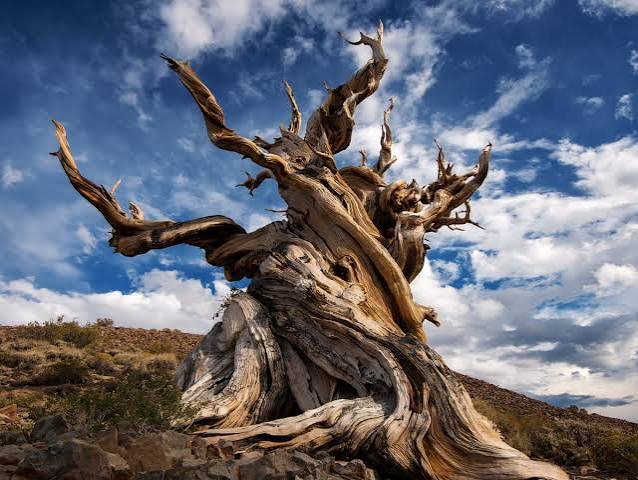
IN THE BEGINNING WAS THE TREE
Not the very beginning, but for our purposes. Because we could muster a good argument that without the tree, there would be no human.
Let us be grateful, then, for the tree.
Tree: a plant with the biomechanics to support height and weight; a tall perennial woody plant having a main trunk and branches forming a distinct elevated crown.
I was never a fan of trees. This is something you do not admit if you live in the Great Pacific Northwest. I moved to Tacoma at age 21, a new mother, unfinished and stunned. I put a good face on it, but the towering hemlocks, Douglas firs, and Western red cedars were aliens. I found them oppressive. I was born and raised in southern California (another thing best kept to yourself if you live in the Pacific Northwest). There, trees were politely situated in orange groves, parks, and gardens. Or loosely scattered across California savannah and desert.
Don’t misunderstand: I’m not trying to impugn the conifers of the Pacific Northwest. It’s not like I was proud of my distaste; I simply couldn’t help it. The art of Emily Carr, Canadian painter of surreal trees, made my stomach clench. It was only in the Olympic peninsula’s old growth forests that I opened up. Those forests were otherworldly, but without menace. The canopy was higher, the light pearlescent, like the light under water. And those trees were ancient. That was key.
500 million years ago, random algae washed up on dry land and survived. Over the next 30 million years, plants evolved from terrestrial spores to sheets of cells to forking axes with terminal sporanges (rhymes with orange, produces spores) to non-vascular plants (mosses, liverworts) to vascular plants (ferns, clubmosses and horsetails) to herbaceous plants with roots, stems and leaves (herbs for short).
Actually, saying I was never a fan of trees is not entirely accurate. As a child, I loved California’s ponderosa pines and gin-scented juniper; native mesquite and live oak. And desert trees, palo verde and ironwood. I liked city imports, avocado, magnolia, mulberry, citrus, sycamore, olive, eucalyptus, palm. No, the iconic rows of Mexican fan palms lining the streets of Santa Monica are not native. And yes, they do tower, but they do not leer, nor do they block light. They suggest flight.
Now that I think about it, I realize that I really loved only one import: eucalyptus (do not admit this in California). Otherwise, I preferred smaller plants. Especially cacti.
Plant: a living organism lacking the power of locomotion.
That’s it. A plant cannot move itself.
In 2008, for our 20th anniversary, my husband, Wayne, and I outfitted the VW Eurovan with boots, books, binoculars, bug spray, and beer. I’d always imagined that as I got older I’d get less homesick, but I must one of those people who, like a barnacle, sticks to the first rock it encounters and attaches for life. I’d lived in the Northwest for forty years, and still California meant pining, a pang, an ache—more as time went on. So camping meant heading south. We had a mission: to see the world’s tallest tree, the world’s largest tree, and the world’s oldest tree. They all lived in California.
Prehistoric plants were too soft, too pliant to support the weight of a large structure, until they evolved solid rings to support height and weight; bark to shield capillary action; and collars at the base of each branch, with internal wood dovetails to prevent breakage.
Remember, we’re in geologic time: This took about 100 million years. The first true tree was called Wattieza, closely followed by Archaeapteris, which spread to every land mass on earth. What we might call a weed.
We followed highway 101 to Redwood National Parks, about six hours north of San Francisco. We knew the tallest tree, a coast redwood (Sequoia sempervirens), was somewhere in that park, but its exact location was kept secret to protect against vandalism. We decided that it could be in Prairie Creek Redwood State Park, a component of the Redwood National Parks. We decided this because we wanted to camp at our favorite campground, Gold Bluffs beach, a tiny unimproved campground on the western edge of Prairie Creek. Evidently, we weren’t going to be dogmatic about our mission. We weren’t really dogmatic about most things, especially not when out camping.
Gold Bluffs beach: Gulls, eagles, cliff swallows, pelicans, sanderlings, sea lions, bears and Roosevelt elk. One year, the Roosevelt elk were also staying at Gold Bluffs beach campground, keeping us all on alert. One year, humpback whales surfed the swells just offshore.
From the beach, we could watch the sunset. From our campsite, we could hike into the redwoods, through Fern Canyon, up the Clintonian trail and across Miner’s trail. It was impossible to fathom the height of these redwoods: you couldn’t see to the tops. So we chose a particularly immense specimen and bowed our heads. Close enough.
How human was our rapture over superlatives: the tallest, the largest, the oldest. How silly. Every single tree was sublime.
The rise of Archaeapteris forests cooled the earth and removed CO2 from the atmosphere. As Archaeopteris stretched out its branches and canopy of leaves, its litter fed the streams. This was a major factor in the evolution of freshwater fishes, whose numbers and varieties exploded. This explosion influenced the evolution of other marine ecosystems. One thing leads to another.
Our second stop was the Sequoia and Kings Canyon National Parks, home to giant sequoias (Sequoiadendron giganteum). The largest giant sequoia was the largest tree in the world at 52,508 cubic feet (by volume). Actually, this park was home to the 30 largest trees in the world, all of which had been named at random, by random men: General Sherman, General Grant, President, Lincoln, Stagg, Boole, Genesis, Franklin, King Arthur, Monroe, Robert E Lee. (There’s a movement to change that one.) At number 14 we get Ishi Giant, named after the “last wild Indian” in North America; at 18, Washington, named after the United States’ first president. At 27, Chief Sequoyah, for whom the species was named.
The presumption of those random men, assuming naming rights for the largest trees in the world. And why is the largest one named after the architect of modern warfare—ruthless, relentless, pitiless, brutal, barbarous? They should change that one too.
Also, not one—not one—is named after a woman. Even though trees are obviously female.
The General Sherman had a parking lot 500 feet away. As with the coast redwoods, it was hard to appreciate its size, since they’re all immense: tall as a 26-story building, wide as multiple city streets. I touched the exfoliating bark. I wanted to lean my head against it, but I didn’t want to intrude. And there were people milling about, clomping all over the long-suffering roots. Which is not good for a tree.
Archaeapteris was the first plant to produce an extensive root system. This had a profound impact on soil chemistry. One thing leads to another: Once these ecosystem changes took place—leaves, litter, soil, air temperature and composition—the earth’s ecosystem was changed for all time.
For the first time in living memory, wildfire tore through California’s sequoia groves last year, torching about a third of the giants. These trees had formerly been able to withstand wildfire, but because of a century of human encroachment and forest management, wildfire now burns hotter. One thing has always led to another: this ecosystem change is for all time. We’re reaching a stage in the earth’s evolution where such trees will never grow again. Or we’re past that stage. Where in the world do we find slow time, where a seed can sprout and the seedling can grow, unhurried, under a majestic canopy,for 800 years?
These trees are living relics, and I mourn their accelerated passing. Species have always gone extinct, but this time we are the asteroid.
Finally, we headed east into the White Mountains, home of the Great Basin bristlecone pines (Pinus longaeva). The Bristlecone Pines Preservation Area’s visitor center had mysteriously burned down the week before, so we took off up a paved path without a map. One mile in, we found a marker for Methuselah, the oldest (non-clonal) tree in the world at4,845-years-old. (In 2013 the Rocky Mountain Tree-Ring research group estimated another P. Longavea in this cluster to be 5,062 years old, but no one knew about that one in 2008, and it remains unmarked.)
Standing in front of that worn, contorted, gnarled and furrowed slab, with its blunted, bare limbs twisting toward the sky—and no discernible sign of green, though it was alive—I couldn’t speak. It was awe, the feeling the ocean sometimes evokes in me. That 4,845-year-old bristlecone pine was Life, and in that sense, we were One.
A fossil called Tiktaalik from 385 million years ago was discovered recently, an aquatic vertebrate—a fish—with shoulders, elbows, legs, a neck and wrists. A “fishapod,” close relative to the first tetrapods. Pretend you’re an onion and peel back your historic layers: aquatic vertebrate to terrestrial vertebrate to land mammal to primate to human. Embrace your inner fish, because fish is in your DNA.
And thank the trees.
I am now a fan of trees (though I doubt they’re a fan of us). That camping trip launched the transition. Reading The Hidden Life of Trees, by Peter Wohlleben, in which I learned about trees’ hidden talents—communication, cooperation, mutual protection and aid—finished the job. I don’t think of them as Beings. We don’t gaze into each others eyes to pluck each other’s heartstrings. But I understand that they are sentient entities, as am I, as are we all.
I wish I spoke Tree. I’d like to experience their inner workings. I’d like to tell them I’m sorry.
Ten years after that camping trip, Wayne suddenly died. His death did not change the earth’s ecosystem, but it changed mine. For all time. Without my sidekick, I am a different entity. Like the earth, I adjust. I know one thing leads to another, but it can be hard to see what’s next.
I recently discovered, looking through his old travel journals, that Wayne referred to Gold Bluffs beach as Heaven. I think he meant it literally. I never saw him happier than he was at that beach. When my son took his fiancé to see Gold Bluffs beach last year, he scattered some of Wayne’s ashes for me. Just until I can get back for a proper visit.
This year I moved to Edmonds, a small town north of Seattle. My new neighborhood is treed: mostly Douglas fir and Western red cedar. I do not feel too oppressed. We have coyotes, bunnies, raccoons, a great-horned owl, and many singing passerines. We have a huge peeling madrone, whose lowest branches are smooth as skin, whose fall berries bring varied thrushes in droves. And I have a bit of sun in my new garden. The space is too small for a tree, but I’ve planted manzanita and a few hardy cacti. I know it’s a lot to ask, but I hope they can take the rain.